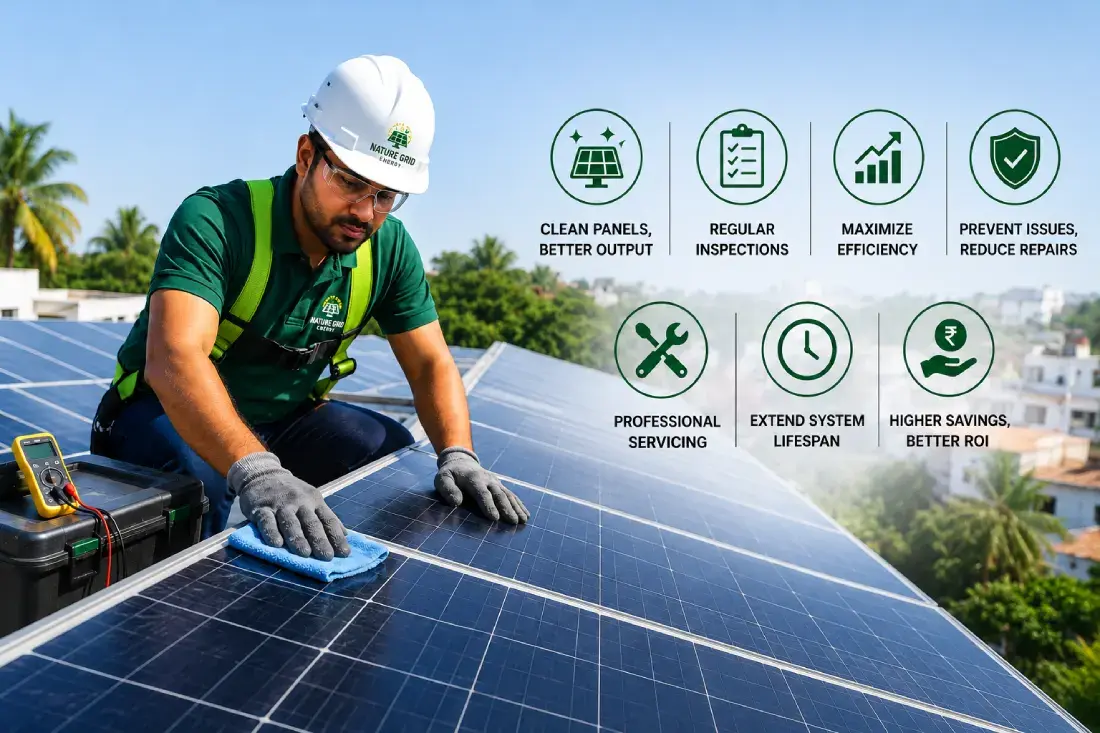
Installing a rooftop solar system is only the first step toward reducing electricity bills and generating clean energy. To continue receiving maximum benefits from your investment, regular maintenance is essential. Although modern solar systems are designed to operate with very little maintenance, ignoring routine inspections and cleaning can gradually reduce electricity generation, shorten equipment life, and increase the chances of expensive repairs.
Dust, bird droppings, fallen leaves, pollution, and seasonal weather conditions all affect the amount of sunlight reaching your solar panels. Even a thin layer of dirt can reduce energy production over time. Likewise, loose electrical connections, damaged cables, or unnoticed inverter faults may lower system performance without obvious warning signs. Fortunately, most maintenance tasks are simple and require only periodic inspections combined with occasional professional servicing.
With proper care, a quality rooftop solar system can continue producing electricity efficiently for more than 25 years. Understanding what to inspect, when to clean, and when to contact a professional can help you protect your investment while ensuring consistent energy production throughout the year.
Why Solar Panel Maintenance Matters
Many homeowners believe that solar panels are completely maintenance-free. While they certainly require less attention than many other household systems, regular maintenance plays an important role in preserving efficiency and preventing avoidable problems.
A well-maintained solar system offers several long-term advantages:
Higher electricity generation.
Better return on investment.
Lower repair costs.
Longer equipment lifespan.
Improved system safety.
Reduced risk of unexpected breakdowns.
Consistent monthly energy production.
Even small improvements in efficiency can result in significant electricity savings over the lifetime of the system.
How Often Should Solar Panels Be Cleaned?
The ideal cleaning frequency depends on your local environment. Homes located near highways, construction sites, factories, or agricultural areas generally accumulate dust much faster than properties in cleaner environments.
For most residential installations, cleaning the solar panels every two to three months is sufficient. During the summer months, dust accumulation may require more frequent cleaning, while areas that receive regular rainfall often need less manual cleaning because rain naturally removes much of the surface dust.
Rather than following a fixed schedule, homeowners should monitor system performance regularly. If electricity generation drops noticeably despite sunny weather, accumulated dirt may be one of the contributing factors.
Monthly Inspection Checklist
Regular inspections allow homeowners to identify minor issues before they become expensive repairs. Most inspections require only a visual examination and a quick review of the inverter display.
A monthly inspection should include:
Check for dust accumulation.
Remove bird droppings.
Inspect for fallen leaves.
Look for cracks in panels.
Examine mounting structure.
Inspect electrical wiring.
Check inverter display.
Verify energy generation.
Look for loose cables.
Ensure there is no standing water.
Keeping a simple maintenance log also makes it easier to identify gradual reductions in system performance.
Signs Your Solar System Needs Attention
Not every issue is immediately visible. In many cases, homeowners first notice a problem when their electricity bill suddenly increases or the monitoring app reports lower generation.
Watch for these warning signs:
Unexpected drop in electricity production.
Inverter warning lights.
Error messages on the monitoring app.
Physical cracks in panels.
Loose mounting brackets.
Damaged wiring.
Water leakage near electrical components.
Unusual inverter noises.
Frequent system shutdowns.
Burn marks around electrical connections.
The Importance of Monitoring Your Inverter
The inverter is often called the brain of a rooftop solar system because it converts the electricity generated by the panels into usable power for your home. Modern inverters also provide valuable information about system performance through digital displays or mobile applications.
Homeowners should regularly review:
Daily electricity generation.
Monthly performance trends.
Error notifications.
Grid connection status.
Historical energy production.
System efficiency.
Monitoring this information allows problems to be identified much earlier than relying solely on monthly electricity bills.
Professional Maintenance vs DIY Inspection
Many homeowners wonder whether they should maintain the system themselves or hire professionals. The answer depends on the type of maintenance required.
Basic tasks such as visual inspections, monitoring energy production, and removing light dust can usually be handled safely by homeowners. However, electrical inspections, inverter servicing, wiring repairs, insulation testing, and structural maintenance should always be performed by qualified technicians.
Professional servicing generally includes:
Electrical safety inspection.
Performance testing.
Thermal scanning.
Inverter diagnostics.
Wiring inspection.
Earthing verification.
Mounting structure inspection.
Scheduling professional servicing once every year can greatly improve system reliability.
Mistakes That Can Reduce Solar Panel Efficiency
Many homeowners unknowingly reduce system performance by following incorrect maintenance practices.
Avoid these common mistakes:
Ignoring dust accumulation for long periods.
Using hard water that leaves mineral deposits.
Walking on solar panels.
Cleaning panels during extremely hot afternoons.
Ignoring inverter warning messages.
Allowing trees to create shade.
Delaying repairs after storms.
Skipping annual professional inspections.
Preventive maintenance is always less expensive than major repairs.
How Proper Maintenance Improves Long-Term Savings
A rooftop solar system is expected to generate electricity for more than two decades. Even a small reduction in efficiency every year can result in a significant loss of electricity generation over the system's lifetime.
Keeping the system clean and well-maintained helps ensure:
Maximum daily electricity production.
Lower electricity bills.
Reduced maintenance expenses.
Longer equipment lifespan.
Higher return on investment.
Better warranty compliance.
Reliable performance throughout the year.
Consistent maintenance allows homeowners to enjoy the full financial benefits of their solar investment.
Conclusion
Rooftop solar systems require relatively little maintenance, but regular care plays a vital role in maximizing their efficiency and lifespan. Simple practices such as cleaning the panels, monitoring inverter performance, inspecting electrical connections, and scheduling annual professional servicing can prevent costly repairs while ensuring consistent electricity generation. By adopting a proactive maintenance routine instead of waiting for problems to appear, homeowners can protect their investment, reduce electricity costs, and enjoy reliable renewable energy for more than 25 years.