
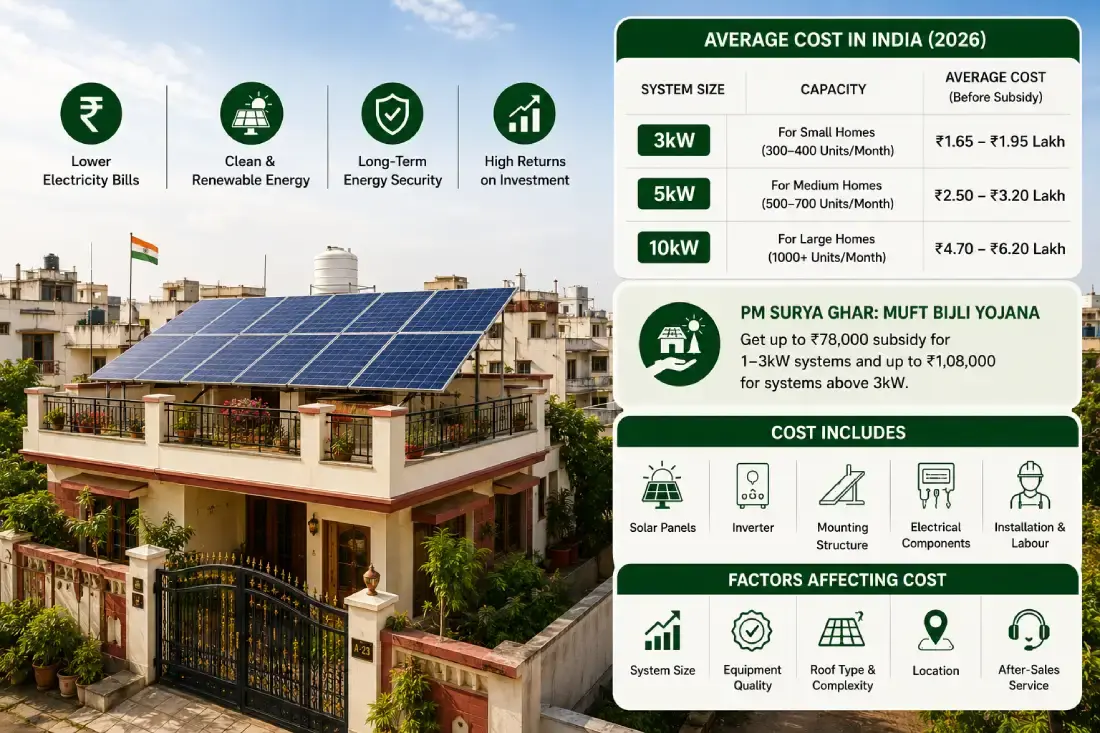
Installing a rooftop solar system is one of the most effective ways to reduce electricity bills and gain long-term energy independence. However, one of the biggest questions homeowners ask before investing is, "How much does a solar system actually cost?" The answer isn't always straightforward. While advertisements often promote attractive starting prices, the final installation cost depends on several factors, including system size, equipment quality, rooftop design, location, installation complexity, and government subsidies.
In 2026, solar technology has become more efficient and affordable than ever before. Government initiatives such as the PM Surya Ghar: Muft Bijli Yojana have further reduced the upfront investment for residential consumers. At the same time, the market has become crowded with installers offering widely different quotations, making it difficult for homeowners to understand what they're actually paying for. Some quotations include every required component, while others exclude important items that later appear as additional charges. Understanding the complete pricing structure before signing any agreement can help you avoid unexpected expenses and choose a system that delivers the best long-term value rather than simply the lowest price.
What Determines the Cost of a Solar System?
There is no single fixed price for rooftop solar because every property has different requirements. Two houses with the same monthly electricity bill may receive different quotations depending on rooftop orientation, available space, wiring requirements, and the quality of equipment selected.
The overall project cost is influenced by several important factors.
Solar panel brand and efficiency.
Inverter technology.
System capacity.
Roof type and installation complexity.
Mounting structure quality.
Electrical upgrades.
Net metering requirements.
Location and transportation costs.
Warranty and after-sales support.
Choosing cheaper equipment may reduce the initial investment, but it can also lower electricity generation, reduce system lifespan, and increase maintenance expenses in the future. For this reason, homeowners should compare the overall value rather than focusing only on the lowest quotation.
Hidden Costs Many Buyers Don't Expect
One of the biggest reasons homeowners exceed their planned budget is because some quotations exclude essential services. While the advertised price may look attractive, additional charges often appear during installation.
Some commonly overlooked expenses include:
Structural reinforcement if the rooftop requires strengthening.
Additional cable length for distant inverter placement.
Transportation to remote locations.
Extra mounting material for special roof designs.
Civil work for inverter installation.
Net meter application fees.
Electrical panel modifications.
Earthing upgrades. Lightning arrestor installation.
- Maintenance packages.
Always request an all-inclusive quotation before making your decision. A transparent quotation should clearly mention every included item and specify whether any additional charges may apply
Is Choosing the Cheapest Installer a Good Idea?
Price is important, but it should never be the only deciding factor.
A significantly cheaper quotation may indicate compromises in equipment quality, warranty coverage, installation standards, or after-sales support. Since rooftop solar is expected to operate for more than two decades, selecting reliable equipment and experienced installers usually provides better long-term value.
Before finalizing any installer, consider the following:
Experience with residential projects.
Government empanelment.
Product warranties.
Installation quality.
Customer reviews.
Service response time.
Maintenance support.
Availability of replacement parts.
A slightly higher initial investment can often prevent expensive repairs later.
Government Subsidy Can Reduce Your Investment
One of the biggest advantages for homeowners in 2026 is the availability of government financial assistance through the PM Surya Ghar scheme. Eligible residential consumers can receive subsidy benefits after successful installation and verification.
The subsidy helps reduce the effective installation cost, making rooftop solar affordable for many middle-class households.
Besides lowering the upfront investment, the subsidy also improves the overall return on investment because homeowners recover their remaining installation cost much faster through monthly electricity savings.
How Much Can You Save Every Month?
The financial benefit of rooftop solar depends on electricity consumption, sunlight availability, and local electricity tariffs. Households with higher daytime electricity usage generally recover their investment sooner because they consume more of the electricity generated by their own system.
For many families, monthly savings can be substantial over the life of the system.
Typical benefits include:
Lower electricity bills.
Reduced dependence on future tariff increases.
Long-term financial stability.
Better return on home improvement investment.
Potential earnings through net metering where applicable.
Over a lifespan of 25 years or more, the cumulative savings can significantly exceed the original installation cost.
Return on Investment (ROI)
Unlike many household purchases that lose value over time, rooftop solar is an asset that continues generating financial returns every day.
Most residential systems recover their installation cost within a few years depending on:
Electricity consumption.
Local electricity tariff.
Government subsidy.
System size.
Quality of installation.
Annual electricity generation.
After the investment is recovered, the electricity generated by the system effectively becomes free, apart from minimal maintenance costs.
Mistakes That Increase Installation Costs
Many homeowners unintentionally increase their project cost because of poor planning or incomplete information.
Avoid these common mistakes:
Choosing installers based only on the lowest quotation.
Ignoring equipment warranties.
Purchasing oversized systems without proper calculation.
Skipping rooftop inspection.
Comparing quotations with different specifications.
Ignoring after-sales support.
Not checking subsidy eligibility before installation.
A properly planned project almost always delivers better financial returns over the long term.
Should You Install Solar in 2026?
For most residential homeowners with regular electricity consumption, 2026 remains an excellent time to invest in rooftop solar. Equipment quality has improved, installation costs have become more competitive, and government subsidy programs continue to reduce the initial investment. Combined with rising electricity tariffs, rooftop solar offers both immediate monthly savings and long-term financial security.
Instead of asking "How much does solar cost?", a better question is "How much will I save over the next 25 years?" When viewed from that perspective, rooftop solar becomes less of an expense and more of a long-term investment that continues generating value year after year.
Conclusion
The actual cost of a rooftop solar system depends on much more than the number of solar panels installed. Equipment quality, inverter technology, installation standards, government subsidy, rooftop conditions, and after-sales support all contribute to the final investment. By understanding the complete pricing structure, requesting transparent quotations, and choosing an experienced installation partner, homeowners can avoid hidden expenses and maximize the return on their investment. With electricity prices expected to continue rising, rooftop solar remains one of the smartest financial and environmental decisions a homeowner can make in 202