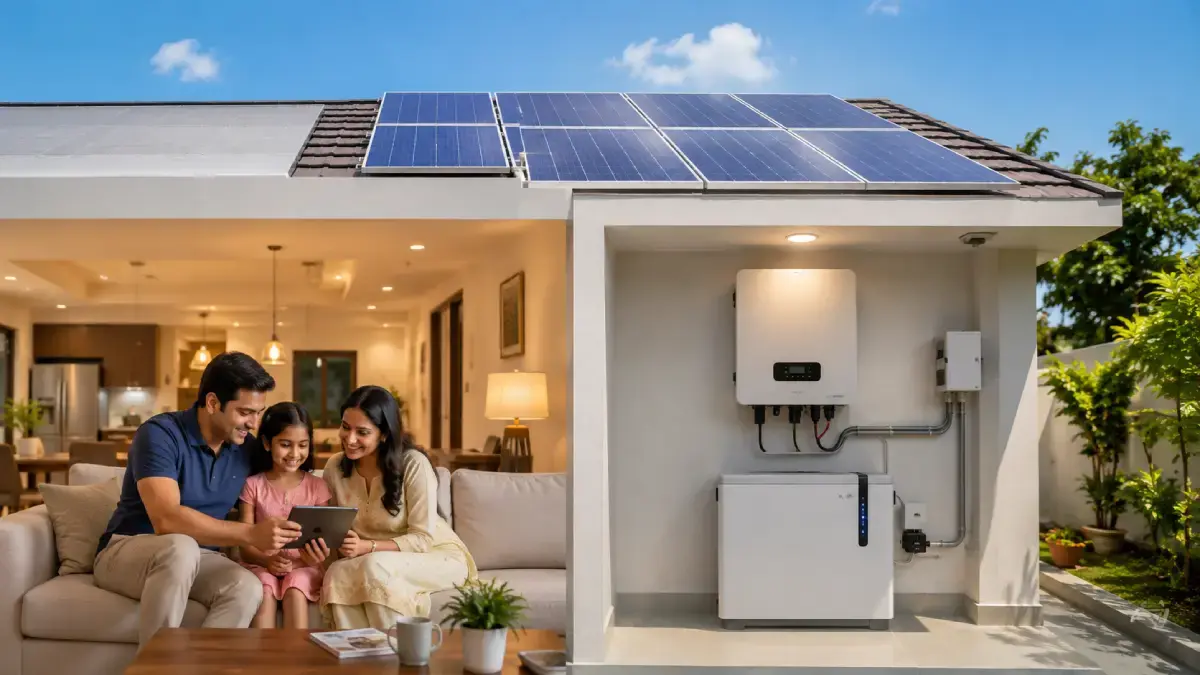
The PM Surya Ghar: Muft Bijli Yojana is one of the Government of India's most significant initiatives to encourage the adoption of rooftop solar systems for residential homes. Rising electricity costs have made solar energy an attractive investment, and this scheme further reduces the financial burden by providing eligible homeowners with government subsidies. Installing a rooftop solar system not only helps reduce monthly electricity bills but also allows households to generate clean, renewable energy for decades. With improved technology, longer panel warranties, and government support, rooftop solar has become a practical solution for homeowners looking to lower energy expenses while contributing to a sustainable future. The scheme is designed to make the entire process transparent, from application and technical approval to installation and subsidy disbursement. Homeowners who understand the eligibility criteria and follow the correct application process can receive financial assistance directly into their bank accounts after successful installation.
What is PM Surya Ghar: Muft Bijli Yojana?
PM Surya Ghar: Muft Bijli Yojana is a central government scheme that supports residential rooftop solar installations by providing financial assistance to eligible households. The objective is to increase the use of renewable energy, reduce dependence on conventional electricity sources, and help families lower their monthly electricity expenses. Under this scheme, homeowners can install a grid-connected rooftop solar system through an empanelled vendor. After installation, inspection, and approval by the local electricity distribution company (DISCOM), the subsidy amount is transferred directly to the beneficiary's bank account through the Direct Benefit Transfer (DBT) system. The initiative also supports India's long-term renewable energy goals by encouraging decentralized electricity generation at the household level.
Highlights
Government subsidy for residential rooftop solar.
Direct Benefit Transfer (DBT) to beneficiaries.
Applicable only to grid-connected rooftop systems.
Installation through approved vendors.
Online application and tracking.
One subsidy per eligible household.
Who Can Apply?
Not every property qualifies for the scheme. Applicants must meet the eligibility conditions prescribed by the government to receive the subsidy.
The applicant should be the owner of a residential property with a valid electricity connection. The rooftop should be suitable for installing solar panels, and the installation must be completed through an empanelled vendor approved under the scheme. Applicants are also required to have an Aadhaar-linked bank account so the subsidy can be transferred directly.
The scheme is not available for commercial establishments, industrial buildings, or off-grid solar installations. Projects completed without following the approved process may also become ineligible for subsidy benefits.
Eligibility Checklist
Indian citizen.
Residential property owner.
Active electricity connection.
Suitable rooftop space.
Aadhaar-linked bank account.
Installation through approved vendor.
Documents Required
Preparing the necessary documents before starting the application can save time and help avoid unnecessary delays during verification. Applicants generally need identity proof, electricity connection details, bank account information, and property-related documents. Depending on the local DISCOM, additional documentation may be requested during the approval process.
Documents
Aadhaar Card.
PAN Card.
Latest electricity bill.
Bank account details.
Passport-size photograph.
Property ownership proof (if required).
Mobile number linked with Aadhaar.
Application Process
The application process is completed online and involves several stages, including registration, technical approval, installation, inspection, and subsidy disbursement. The first step is to register on the official portal using your electricity consumer number and mobile number. After registration, an application for rooftop solar installation is submitted to the concerned DISCOM for technical feasibility approval. Once approval is received, the homeowner can select an empanelled installer to complete the project. After installation, the DISCOM conducts an inspection and installs the net meter. The applicant then uploads the required documents and completion certificate to the portal. Once verification is completed successfully, the subsidy amount is transferred directly to the registered bank account.
Application Steps
Register on the official portal.
Submit rooftop solar application.
Obtain technical feasibility approval.
Select an empanelled installer.
Complete rooftop solar installation.
Receive inspection and net meter.
Submit subsidy request.
Receive subsidy through DBT.
Benefits of Installing Rooftop Solar
Apart from receiving financial assistance from the government, rooftop solar systems provide long-term economic and environmental benefits. A properly designed solar system can significantly reduce dependence on grid electricity while protecting homeowners from rising electricity tariffs.
Solar panels require minimal maintenance and are designed to operate efficiently for more than two decades. Homes equipped with rooftop solar systems may also experience an increase in property value while contributing to cleaner energy production.
Major Benefits
Lower monthly electricity bills.
Reduced dependence on conventional electricity.
Protection from increasing power tariffs.
Clean and renewable energy generation.
Low maintenance requirements.
Long operational life.
Improved property value.
Net metering benefits.
Common Mistakes to Avoid
Many subsidy applications face delays because applicants overlook small but important requirements. Choosing a non-approved installer, uploading incorrect documents, or providing inaccurate banking information can slow down the approval process.
Homeowners should carefully review all submitted information before applying and ensure that installation begins only after receiving technical feasibility approval from the DISCOM.
Avoid These Mistakes
Using non-approved vendors.
Incorrect document uploads.
Wrong bank account details.
Applying before feasibility approval.
Incorrect consumer information.
Mismatched installation capacity.
Why Choose an Empanelled Installer?
Selecting an empanelled installer ensures that the solar installation complies with government standards and subsidy guidelines. Approved vendors are familiar with the documentation process, technical specifications, and inspection requirements, reducing the chances of application rejection. An experienced installer can also recommend the right system size based on electricity consumption, available rooftop area, and future energy requirements, helping homeowners maximize both savings and system performance.
Conclusion
PM Surya Ghar: Muft Bijli Yojana has made rooftop solar more affordable for millions of Indian homeowners by reducing installation costs through government subsidies. With proper planning, accurate documentation, and installation through an approved vendor, households can enjoy lower electricity bills, reliable clean energy, and long-term financial savings. Investing in rooftop solar today is not only a step toward energy independence but also a practical decision that provides benefits for decades while supporting India's transition to sustainable energy.